Super Mario Kart
Nintendo EAD | Nintendo
Kart Racing | Super Nintendo (1992)
Reviewed on SNES and Nintendo Classics on Switch
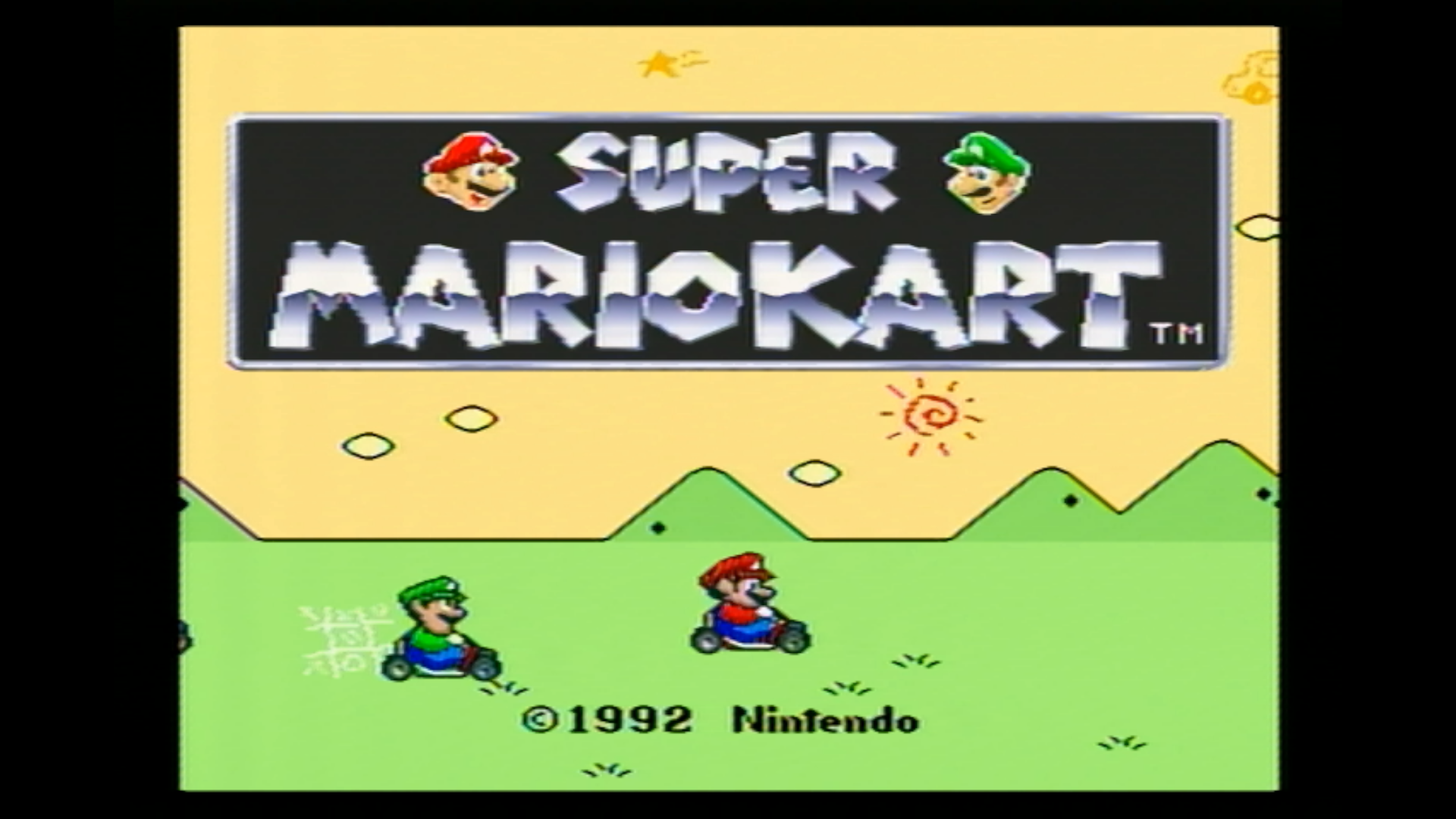
Most of us have fond memories of playing Mario Kart with family or friends, but the series didn’t become a household name until Mario Kart 64. I played the original SNES version occasionally at friend’s houses (I was a Sega kid) but never owned it myself until many years later. Now that three decades (good lord) have passed, it’s worth revisiting the series’ origin to see how this genre-defining racer holds up as not only a game, but a technical time capsule.
Mario Kart’s formula is at its most basic here. Eight Mario universe characters race to the finish with arcade-style go-kart racing gameplay. Super Mario Kart was a technical feat at the time, utilizing Mode 7 parallax scrolling to create the illusion of depth and 3D. Grand Prix mode has you racing across a set of courses, trying to finish in the top three. Battle Mode pits you against opponents in arena combat. Both modes feature items, such as turtle shells, banana peels, and other power-ups, and can make or break a race. Landing a red shell on whoever is playing next to you remains a blast.
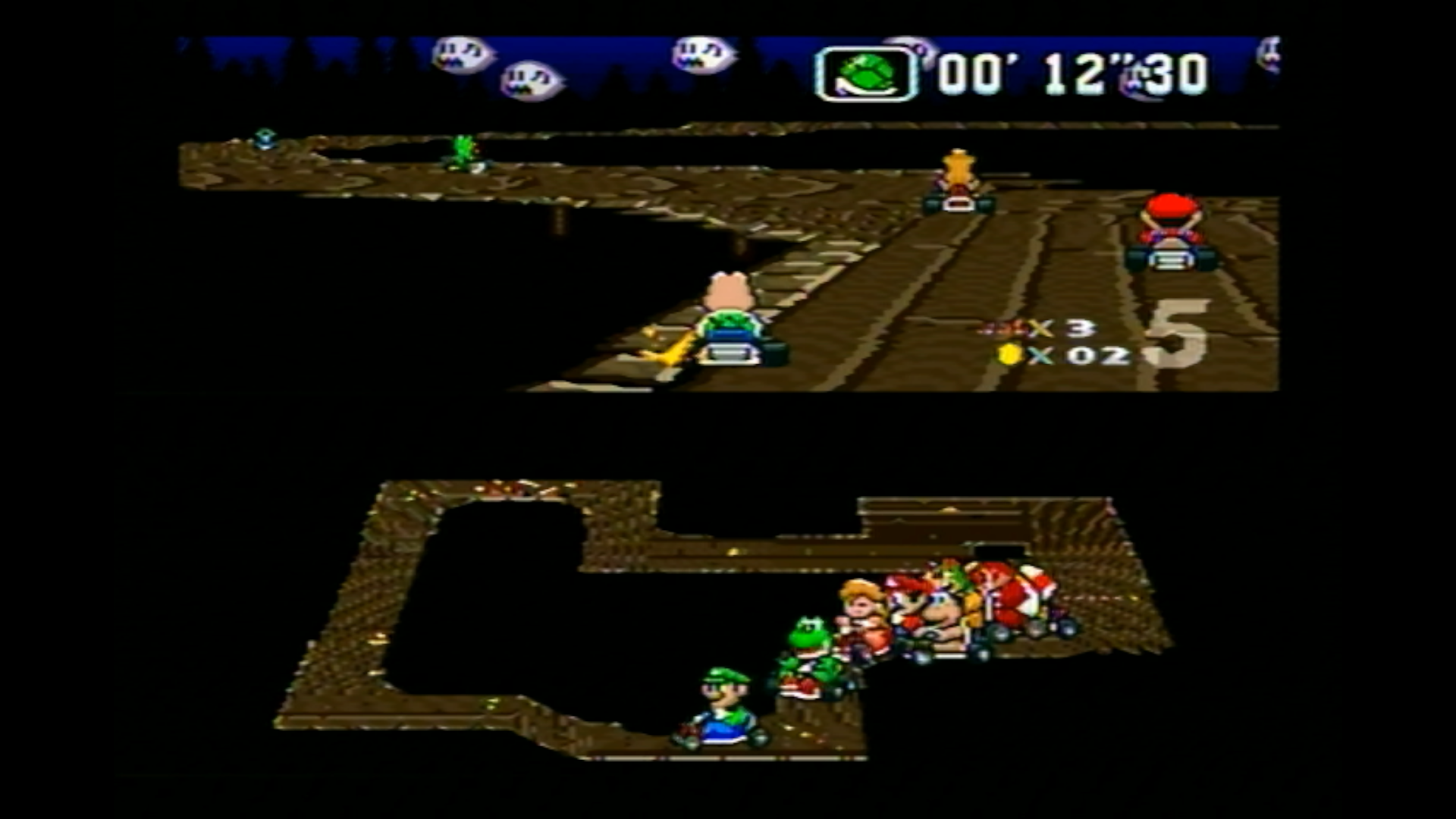
Despite the SNES controller’s D-pad predating modern analog sticks, the controls are surprisingly responsive. Characters have distinct handling differences based on weight class. Lightweights like Koopa Troopa dart around corners while heavyweights such as Bowser can plow through opponents. The track design may be basic compared to later entries in the series, but the timeless foundational design is the reason why tracks like Rainbow Road and Bowser’s Castle have been sequel mainstays. The colorful pseudo-3D Mode 7-powered visuals are still a delight, and even gave this Sega kid some envy back in the day.
There isn’t usually much to gripe about with Nintendo’s game design, but rubber-banding AI seems to be a constant throughout the series, and this entry is no exception. Opponents can magically catch up no matter how masterfully you race, which can be infuriating. There’s also the reality that single-player will never be as satisfying as playing next to a real, breathing friend.
Super Mario Kart laid the foundation for one of Nintendo’s most beloved and best-selling multiplayer franchises. While later entries in the series perfected the formula, it’s still worth grabbing a player two and seeing where it all began.
⭐️⭐️⭐️⭐️
Good:
- Responsive controls
- Timeless track design
- Mode 7 pseudo-3D visuals
Bad:
- Frustrating rubber-banding AI
- Better with friends than solo